
Tesla and SpaceX have filed a legal action against TERA-print LLC, seeking a declaratory judgment to secure the rights to the “Terafab” brand name. The lawsuit, filed in the U.S. District Court for the Western District of Texas, marks a significant hurdle for Elon Musk’s massive semiconductor and AI infrastructure project currently under development in Grimes County.
The dispute centers on the name “Terafab,” which Musk’s companies intend to use for a facility aimed at large-scale AI compute and chip manufacturing. TERA-print, a nanotech firm, has utilized the “Tera-Fab” name for approximately a decade in relation to its desktop-sized lithography and nanofabrication tools. Musk’s legal team is asking the court to rule that their project does not infringe on TERA-print’s trademark, citing the vast difference in scale and purpose between a tabletop research tool and a multi-billion-dollar industrial complex.
A Compressed Trademark Timeline
The legal friction began following a flurry of filings in May 2026. Tesla submitted its initial trademark applications for “Terafab” on May 18. Just four days later, on May 22, TERA-print applied to expand its existing “Tera-Fab” mark to cover semiconductor and artificial intelligence categories—the same sectors targeted by Musk’s new venture. The companies attempted to resolve the matter through six settlement meetings between June and August 2026, but those negotiations failed to produce an agreement.
The $119 Billion Industrial Vision
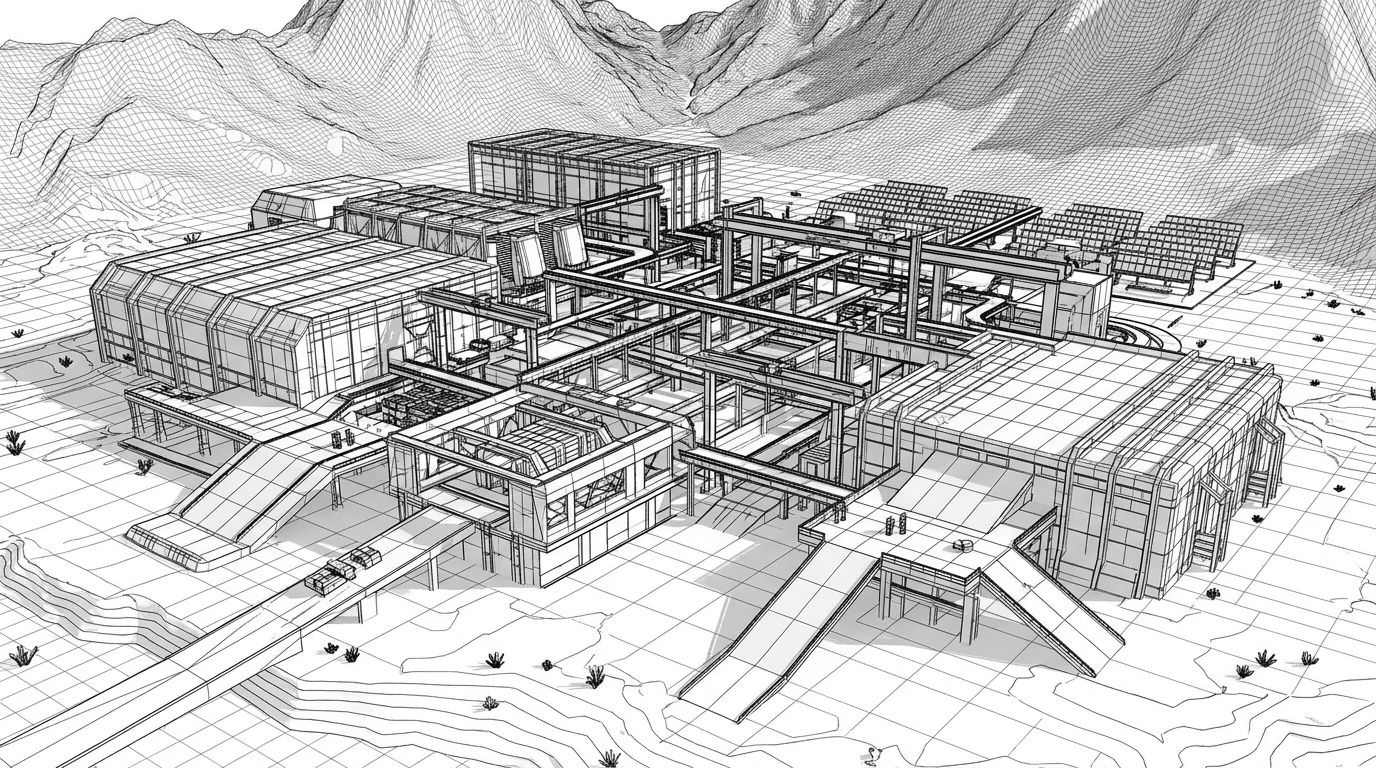
At the heart of the dispute is a project of unprecedented scale. The Terafab facility represents a total potential investment of up to $119 billion across multiple phases. The first phase alone is valued at $16.8 billion and is designed to produce 1 terawatt of AI compute annually—roughly ten times the capacity of Gigafactory Texas.
Intel joined the project in April 2026 as a primary foundry and manufacturing partner. The facility is expected to utilize Intel’s most advanced 14A and 18A process nodes to manufacture specialized chips. Musk’s legal team argues that because the project involves such massive infrastructure and specialized industrial partnerships, it is unlikely to be confused with TERA-print’s tabletop products.
While the trademark dispute continues in the Austin-based court, construction plans in Grimes County have not yet been officially delayed. However, a ruling against Tesla and SpaceX could force a rebranding of the project or lead to significant settlement costs as the first phase of the facility moves toward completion.


